Predicting the 2026 World Cup: Key takeaways from the draw
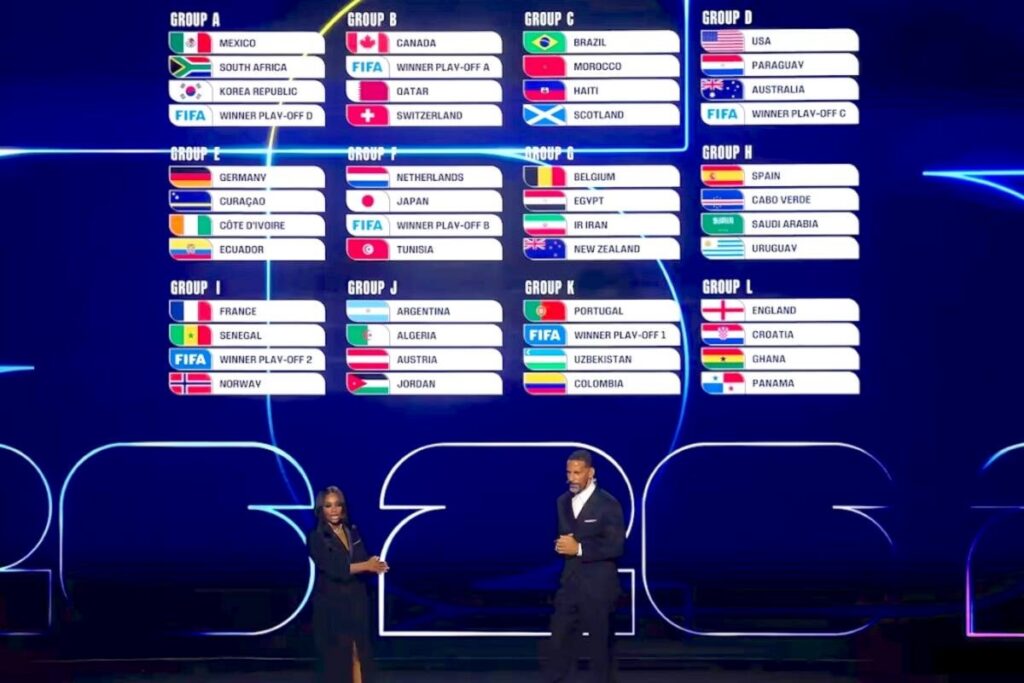

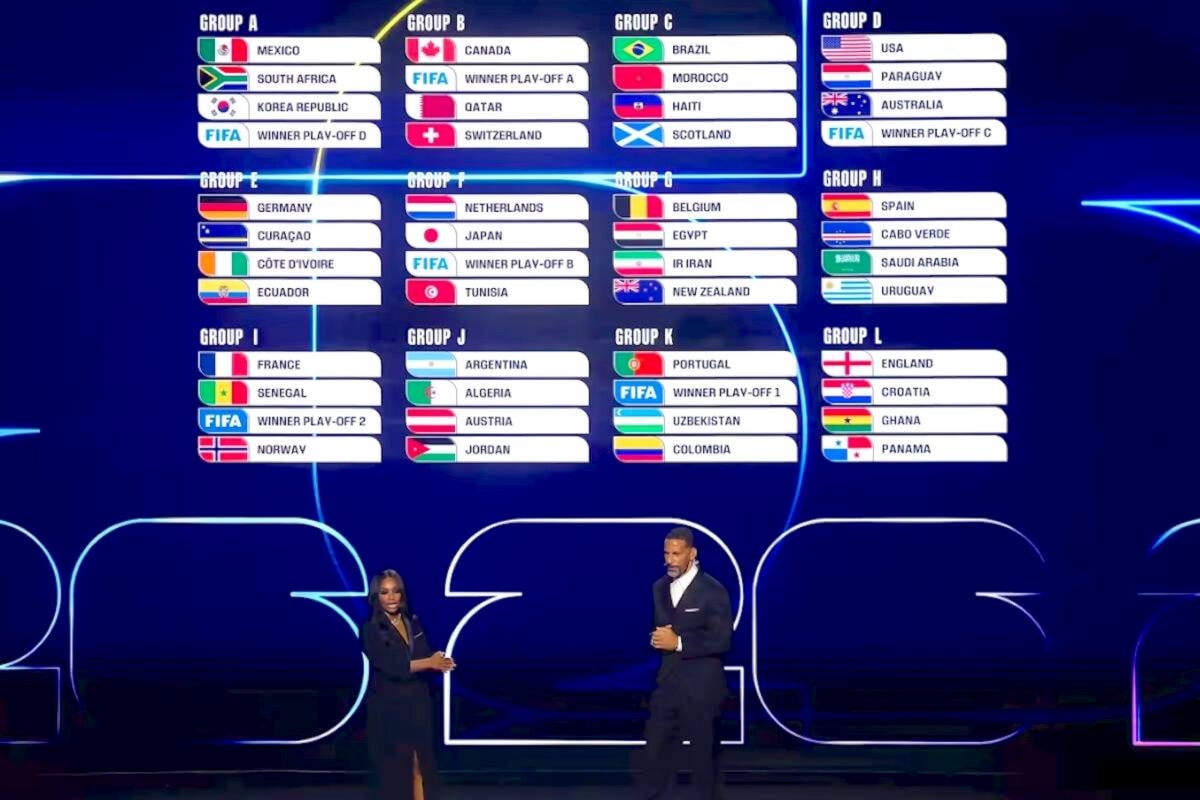
With the 2026 World Cup draw complete, we can finally sketch out how the tournament might unfold — and we’ve run a full simulation to do just that.
Of course, no World Cup ever follows the script. There are always surprise heroes and big-name disappointments. But what we can do is build the most likely bracket on paper, assuming the favourites do what the rankings say they should.
Using the official FIFA world rankings, we’ve projected every match — from March’s playoffs through to July’s final — with the higher-ranked team advancing each time. The same rankings were also used to determine which third-place teams progress, sending the eight strongest into the round of 32.
In this scenario, the six playoff spots are claimed by Denmark, Italy, Turkey, Ukraine, DR Congo and Iraq. From there, the knockout picture begins to take shape…
A look at the projected 2026 World Cup bracket
The draw was structured so that the world’s top four — Spain, Argentina, France and England — are on course to be in separate quarters, provided they win their groups. Even so, none of their paths to the semifinals look straightforward.
Spain, the current European champions, appear to have the most navigable run in this simulation, potentially meeting Austria, Croatia and Belgium on their way to the last four.
France would face a far tougher task, with clashes against Germany and the Netherlands looming before a possible rematch of their EURO 2024 semifinal versus Luis de la Fuente’s Spain.
England, though, might have the greatest challenge of the lot: Haaland’s Norway in the round of 32, host nation Mexico in the last 16, and then five-time champions Brazil in the quarter-finals.
And then there’s Argentina. The reigning champions are projected to go up against Marcelo Bielsa’s Uruguay before a blockbuster quarter-final against Portugal — a matchup that would finally bring Lionel Messi and Cristiano Ronaldo together on the World Cup stage.
What the rankings miss
While rankings give structure, they don’t always reflect reality.
Norway, for example, currently sit below Senegal in the standings — but with Erling Haaland leading the line, they may well be favourites to take second place in Group I. That could dramatically soften their round-of-32 opponent, swapping England for Ecuador in this scenario.
Similarly, if Turkey navigate the playoff successfully, they will back themselves to beat the United States to first place in Group D. The winner of that pool could easily become the tournament’s most dangerous dark horse, needing only to get past hosts Canada and a vulnerable Belgium to reach the quarter-finals.
On the other end of the spectrum, Brazil and the Netherlands look most susceptible to an early stumble among the traditional giants. A failure to top their groups would likely throw them into a heavyweight showdown in the first knockout round. Even if they finish first, neither side has a comfortable opener — Brazil face 2022 semifinalists Morocco, while the Netherlands must contend with an emerging Japan.
A draw built for drama
No matter how you slice the numbers, this draw promises fireworks: huge showdowns from the very start of the knockouts, and a bracket full of potential Cinderella stories.
The rankings can hint at the most likely outcomes — but they can’t capture the chaos that makes the World Cup special. And 2026 looks set to deliver plenty of it.
Share this content: