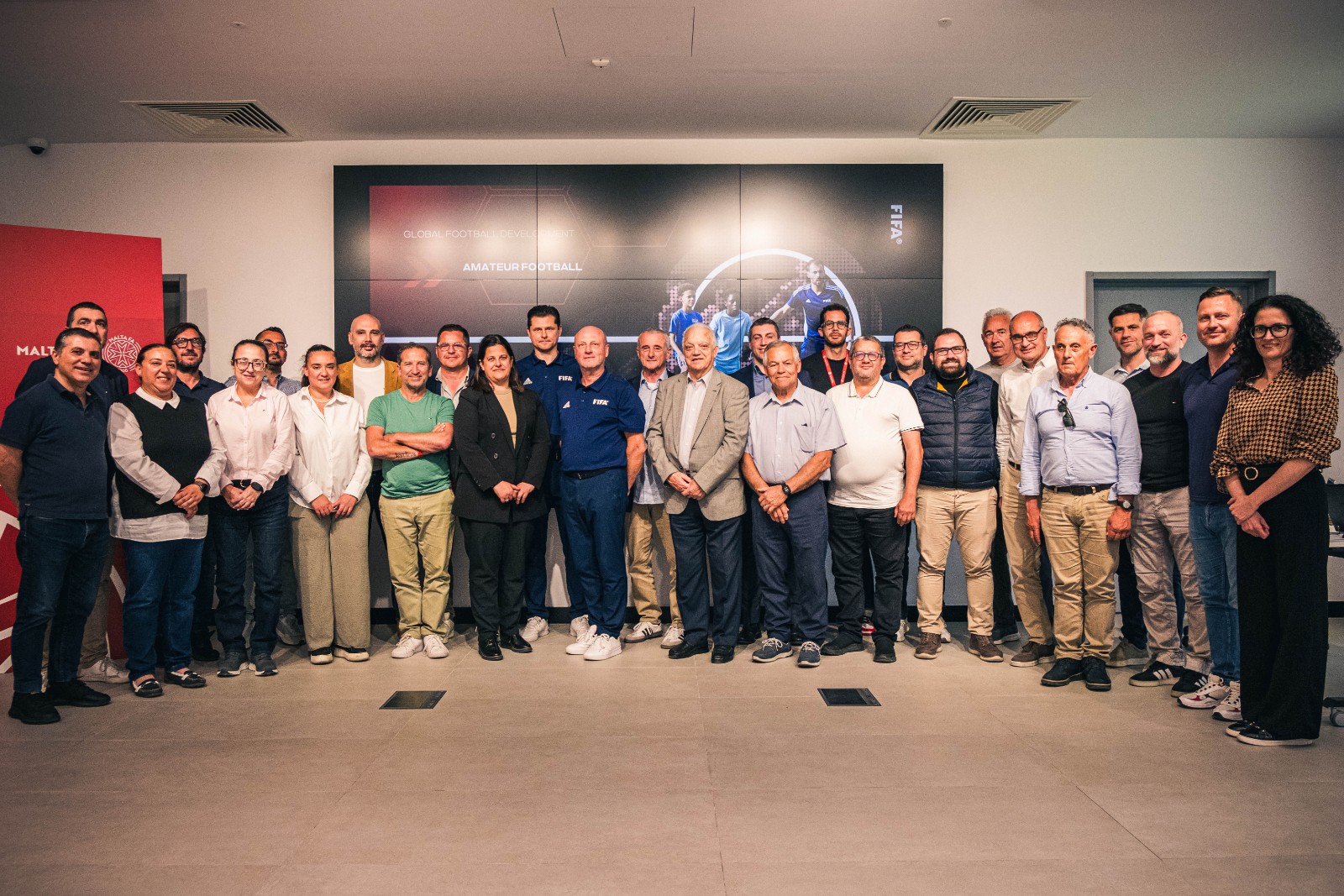
Malta FA hosts FIFA presentation on Amateur Football Environment Analysis
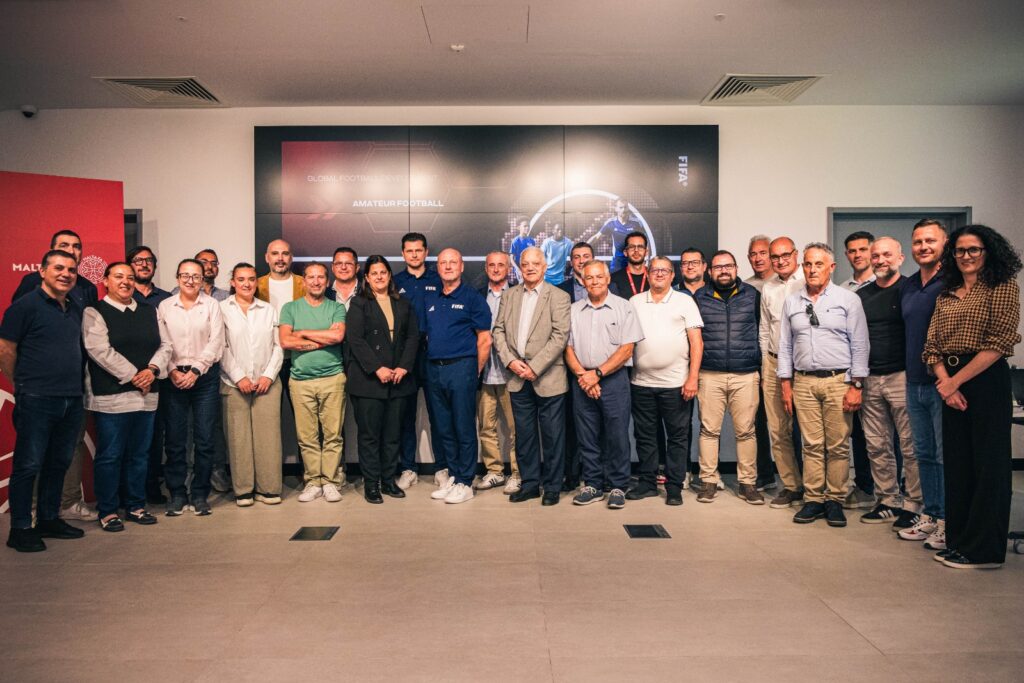

The Malta Football Association recently welcomed a FIFA delegation for the presentation of the Amateur Football Environment Analysis, a major initiative aimed at strengthening amateur football structures and supporting long-term player development through detailed data-driven research.
The project forms part of FIFA’s Global Football Development Division and is designed to assist national associations by providing insights gathered from 185 member associations across all six football confederations.
Through the initiative, FIFA is able to offer tailored guidance and strategic support to national football bodies, helping them improve their football ecosystems and develop more sustainable structures at grassroots and amateur level.
A key focus of the global report is the strong connection between amateur football and talent development. FIFA highlighted that well-organised amateur competitions and structures not only encourage participation and improve player wellbeing, but also create stronger pathways for future elite-level talent.
The report also provides comparative analysis of football structures worldwide, offering national associations valuable benchmarking data on participation, development systems, and player retention.
For the Malta FA, the findings are expected to play an important role in ongoing efforts to strengthen grassroots football, improve development pathways, and build more sustainable amateur football systems across both Malta and Gozo.
FIFA is expected to publish a Malta-specific version of the report in the coming weeks, offering deeper insights into the local amateur football landscape.
Speaking during the event, Matthew Paris said the findings would help the association continue raising standards within Maltese football.
“In its ongoing efforts to improve standards, the Malta FA recently participated in a global benchmarking exercise that assessed the association’s current position and compared it with football associations around the world,” Dr Paris explained.
“The findings are already helping shape the association’s strategic direction and will support more informed, evidence-based decision-making in the years ahead.”
The two-day event featured presentations by Tomas Danilevicius, FIFA Regional Technical Consultant for Europe, and Raimondas Statkevicius, FIFA Amateur Football Manager.
The FIFA representatives guided participants through the findings of the Amateur Football Environment Analysis, with particular attention given to the Maltese football environment.
On the opening day, the presentation was delivered to Malta FA officials, directors and technical staff, followed by discussions focusing on how the report’s recommendations could be implemented locally.
The second day expanded to include representatives from league structures, government entities, member associations, technical bodies and other football stakeholders from Malta and Gozo.
Participants also took part in interactive discussions and scenario-based exercises examining the current state of amateur football and exploring practical solutions for future growth and development.
The Malta FA said the insights gathered during the process will contribute to its long-term strategic planning as it continues collaborating with FIFA and local stakeholders to strengthen amateur football across the islands.
Share this content: