The Middle Sea Race is Up and Running
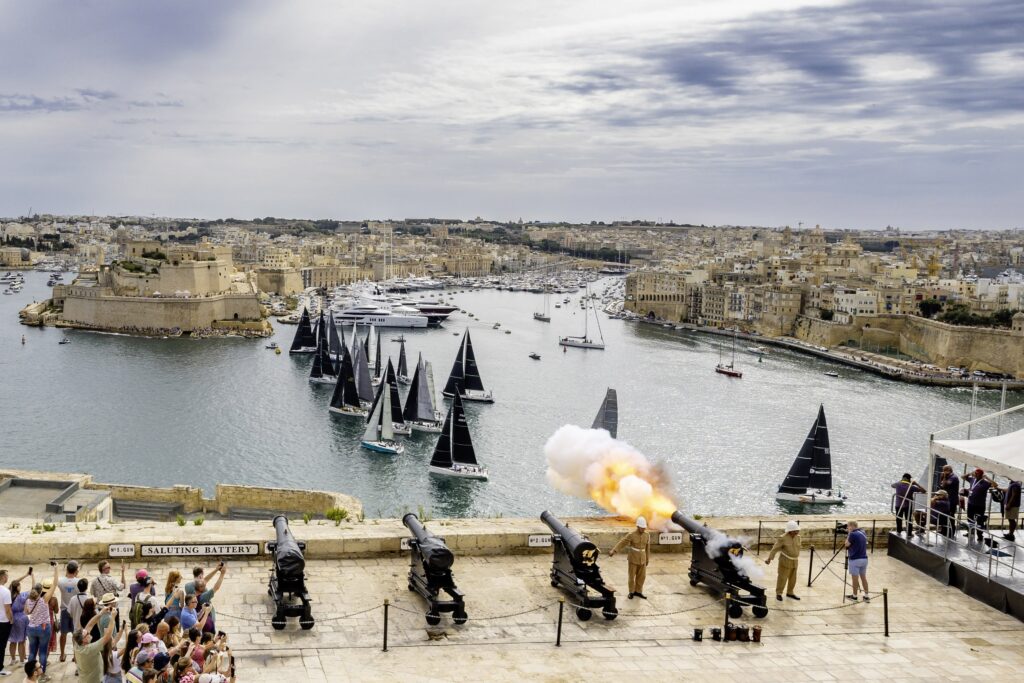
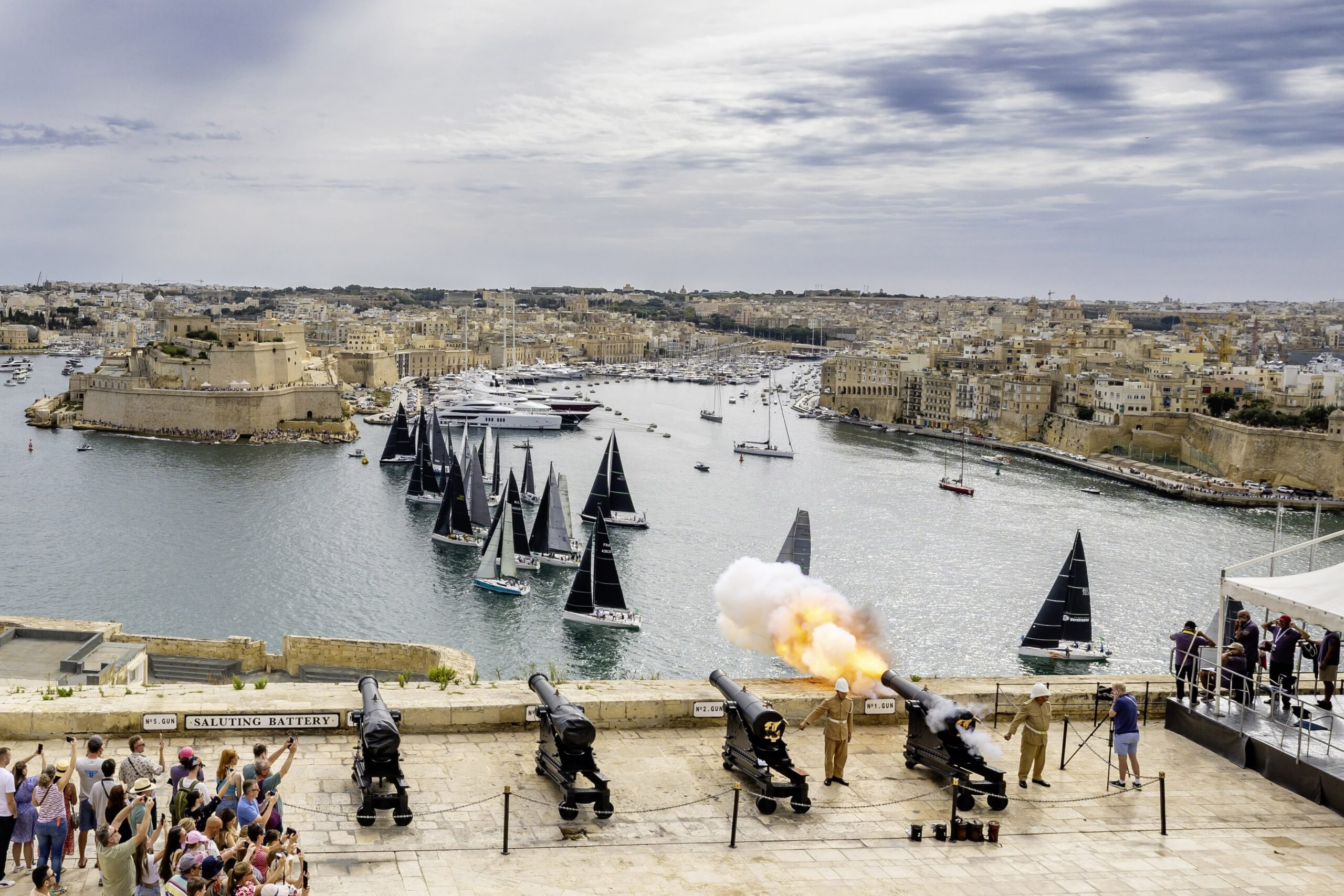
The 46th Rolex Middle Sea Race got underway from Grand Harbour. The gathered fleet was gently propelled out of the magnificent amphitheatre, assisted by an easterly breeze that built as yachts closed on the exit to the open sea. Fringed by limestone bastions and other fortifications, the harbour’s geography played its part with frequent lulls and gusts, as the wind created opportunity and caught out the unready.
117 yachts crossed the start line in seven groups, each dramatically marked by the sound of cannon fire from the Saluting Battery high above the water. By late afternoon, the leading competitors were closing on Capo Passero on the southeast corner of Sicily.
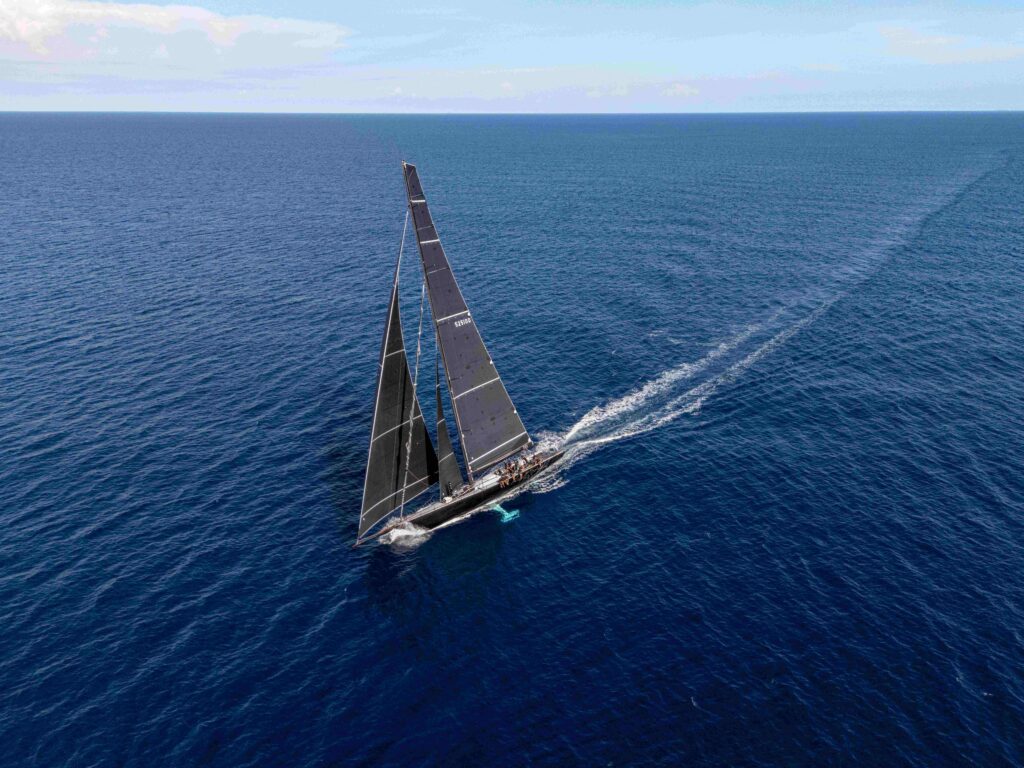
Just as last year the weather forecast was the primary focus on the docks as yachts made their final preparations. The low pressure predicted to leave the North African coast and make its way northeast into the course area was still a threat. The models still exhibited some divergence about the precise impact on the fleet. A few hours in, it is too early to be sure whether the gloomy picture painted last night of storm-force winds and heavy rain on Sunday would directly affect the racing yachts. Tomorrow will reveal all.
First leaders
Leading on the water, the maxi multihull Allegra, a custom Nigel Irens design with creditable pedigree of offshore racing success. Paul Larsen, still the fastest human under sail, had this to say ahead of the race: “This is unfinished business for Allegra. It’s looking quite light and variable for the start. The one thing we can be certain of is the uncertainty. The weather router was saying it could be light and variable from the north…or the south!” Allegra’s previous participation in 2018 ended in the Messina Strait. The crew are looking to dislodge that memory this year. Since leading off the line, the team has put five nautical miles into closest rival Falcon, the foiling DNA F4.
A look at the monohulls
In the monohull fleet, Black Jack 100 leads on the water from Balthasar. The 100 foot (30.48m) maxi’s greater waterline-length and sail area eventually saw Remon de Vos’s crew catch and pass Louis Balcaen’s 72-footer just at the exit to Grand Harbour, and build a 5nm lead. Just being ahead will settle nerves, with a long and technical night ahead for the front runners, some of whose models were putting them passing Stromboli in the early hours of Sunday morning. Balcaen’s experienced crew gave him the prefect birthday present, cracking off the middle of the line at pace and leading until the inner breakwater.
Jon Desmond has reported in from the Judel/Vrolijk 52, Final Final: “Cracking our way up to Sicily. Pretty awesome start, wild with cannon fire and all that jazz. JT (Jim Turner, former Olympian and an America’s Cup figure), SiFi (Simon Fisher, two-time winner of the Ocean Race) and the boys did a good job getting us front row, so pretty sweet. The wind’s about 50 degrees true, but we keep getting headed. Still in the front pack, things are going good, but it could be challenging night. We’ll see.” Indeed, we will.
First away were the five multihulls. Aldo Fumagalli with his Rapido 53XS Picamole from Italy was the lone competitor in this category last year. Whether the Italian regular enjoyed the company is hard to say. Fumagalli certainly was not intimidated as the clock ran down to the start time, and crossed in good shape quickly separating the more cruising oriented Alibi 54 Eleven and Outremer 5x, Luke Seawalker. The more powerful and nimble Allegra and Falcon naturally led the group out of the harbour.

The largest start
The second start was the largest with 25 yachts, including the two Jarhead Young Sailors Foundation crews, JYS Jan and Jarhead. Both crews feature teenagers, with Jan in particular including two 15 year olds and two 16 year olds. Parental permission is required for any sailor under 18, and the JYS programme has proven time and again capable of developing youngsters capable of taking on the rigours of an offshore race. Many alumni are spread through the fleet. Four double handed entries – K’Mena, Lunatika, Mareamore and the classic Mowgli of Portsmouth – demonstrated the spirit of this group of small and slower yachts, who face five or more days at sea. And may be most affected if the forecast low pressure brings the feared strong winds.
More double-handers helped fill the ranks of start three, including Jeremi Jablonski’s Hanse 430 Avanti from the United States. This was the first time in Malta for the crew, but they showed no nerves despite the tight confines, crowds lining the shore and crack of the guns marking each start. At the other end of the experience spectrum appeared local yacht Calypso, the Farr 30 led by Seb Ripard and Dan Calascione. This seasoned team on the smallest yacht in the fleet were outgunned, though, by the Podesta siblings on Elusive 2. Christoph Podesta expertly helming the First 45 through the mêlée on the line.
Larger yachts on the way
The fourth start was marked out by the four ClubSwan 42s, all steaming off the line to the front of the pack. Dominique Tian’s Glen Ellen from France and Valentin Oeru’s Lion Story from Romania made confident departures from the pin end, at Fort St Angelo. Renzo Grottesi’s BeWild and the Sandro Montefusco skippered Aboat Time were just behind. Local interest lay with Jonathan Gambin’s Ton Ton Laferla among others, while the smart money was watching Géry Trentesaux’s Long Courrier, a winner here in 2018 and packed with French offshore talent.
Start five marked the introduction of some larger yachts. The classic lines of the Swan 651 Lunz Am Meer, crewed by a largely Maltese team, contrasted nicely with the more modern Swan 66 Salpare from New Zealand. Stormvogel, the oldest yacht in the fleet and line honours winner in 1968 and 1969 graced the spectacle, while the Lift 45 Maxitude, a 2025 launch, offered a glimpse of the innovation that typifies the sport. Artie III and Otra Vez, two more local entries, brought their fan bases to the scene, and their respective performances will be the subject of enthusiastic debate within the bar of Royal Malta Yacht Club over the coming days.
Powerhouses on the way
Moving into the sixth start, the powerhouses appeared. This pack of feral 50-footers could easily deliver the race winner, such is the array of skill and commitment on display. Daguet 5 from France was striking in green, Final Final equally recognisable in blue. The black of Ràn 8 gave a stealth-like image, while the Django Deer hull-scheme offered some Italian style. It was Quentin Stewart’s Maverick, one of the smaller in the group, that hit the line on the gun, a reminder of the Infiniti 46’s form that took the Guernsey yacht to third place overall in 2016.
Last, but impossibly not least, the big guns came out in start seven. Balthasar and Black Jack vied for the bragging rights of first to exit, while the remaining eight yachts – all over 60 ft – settled in for the long haul. The Australian entry Whisper was well up to the fore, with Varuna VI close behind. The pair of VO65s, including the much-celebrated Chinese-crewed Kranendonk made sedate departures. The striking Nacira 69, 12, brought up the rear.
With Capo Passero only 55nm into the race, there is considerable ground to be covered and many more stories to come.
Share this content: