Five Things Learned After Canada and Bosnia and Herzegovina’s Draw
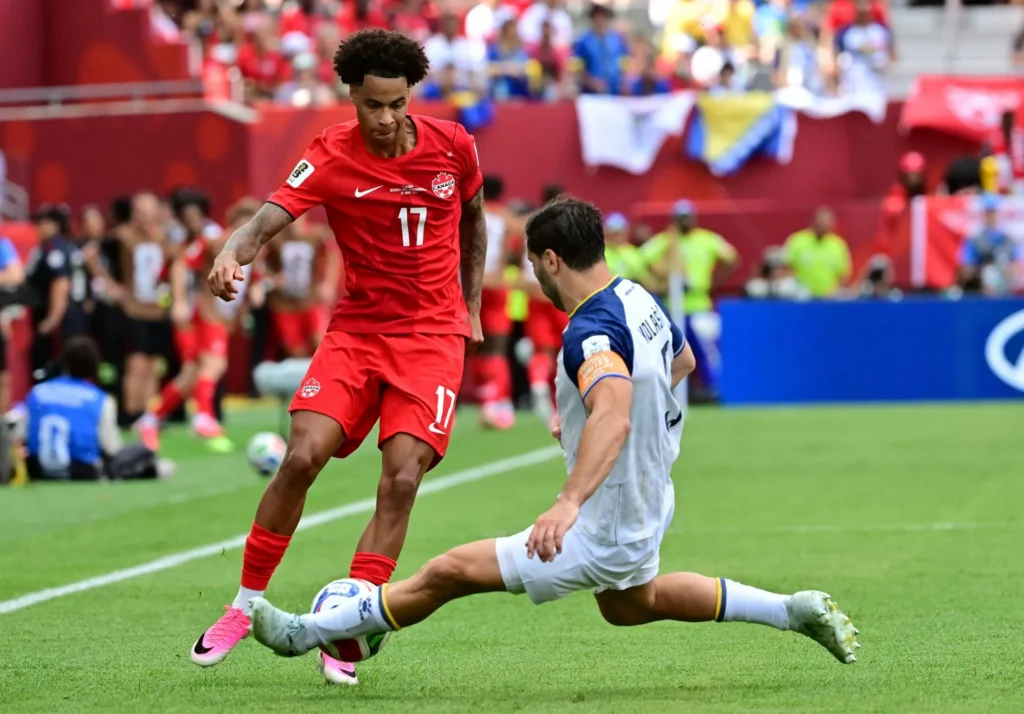

The opening Group B match between Canada and Bosnia and Herzegovina ended in a 1-1 draw at the 2026 FIFA World Cup. Here are the key takeaways from the encounter at Toronto Stadium.
Canada continue to struggle with finishing
A major concern for Canada heading into the tournament was their ability to break down opponents from open play, and that issue appeared again in this match.
The Canadians created several clear chances and had enough opportunities to win the game, although some unlucky moments also played a role. However, Jonathan David and Tani Oluwaseyi were unable to convert their chances, which will be a concern moving forward.
Cyle Larin’s introduction from the bench proved crucial, as he scored the equaliser and rescued Canada from a disappointing result. His performance could strengthen his case for a starting spot against Qatar next Thursday. Without Larin’s impact, Bosnia and Herzegovina may have secured all three points.
Bosnia take advantage of their aerial strength
Bosnia and Herzegovina’s height and physical presence have been one of their biggest strengths, and they showed exactly why in this match.
The Blue Dragons looked dangerous whenever they delivered the ball into the penalty area from set pieces. Their aerial threat eventually paid off when Jovo Lukic scored from close range inside the six-yard box to give Bosnia the lead.
Canada will need to find a way to handle Bosnia’s set-piece threat, while Bosnia will look to continue using their physical advantage throughout the tournament.
Of course, Bosnia’s strength from set pieces was not a surprise. However, it became especially noticeable against Canada, a team that is usually strong at defending dead-ball situations.
This could become an issue for Bosnia moving forward. Although they had a few opportunities on the counterattack to extend their lead, they will need to develop more attacking options. Against more technically gifted teams, relying only on set pieces and defensive organisation may not be enough.
With a home crowd behind them, expectations were high for Canada to deliver. However, the pressure appeared to affect the co-hosts early in the match.
The opening 15 minutes were filled with misplaced passes and a lack of control, making the game feel chaotic. That type of match suited Bosnia, who were comfortable disrupting Canada’s rhythm.
Canada improved after the hydration break and looked more settled, which may have helped them regain composure. This will be an important lesson ahead of their upcoming matches in Vancouver, where they are expected to play in front of an even larger crowd.
Canada coach Jesse Marsch said he wanted to see a packed BC Place, but his team will need to handle the atmosphere better and avoid being overwhelmed by the pressure of playing at home.
Bosnia prepared to defend until the final whistle
Bosnia showed a clear willingness to sit deep, defend as a unit, and protect their advantage. Even before scoring, they were not looking to dominate possession or take control of the match.
Given Canada’s difficulties in breaking down organised defences, Bosnia’s approach worked effectively. Even after Canada found the equaliser, the Blue Dragons appeared satisfied with securing a point rather than pushing for another goal.
That cautious approach may have cost Bosnia in the end, as they had a promising counterattack that could have produced another goal. Head coach Sergej Barbarez admitted he was disappointed with how defensive his team became.
Even without their star player Edin Dzeko, Bosnia had enough quality to show more ambition in the final third. While they are clearly a disciplined and resilient defensive team, that approach alone may not be enough to succeed in a tournament of this level.
Canada’s finishing issues were already clear, but their problems in attack went beyond missed chances. Another major concern was the slow pace of their offensive play.
Too often, the co-hosts moved the ball without urgency and struggled to find creative solutions. Breaking down organised defences has been a known weakness for Canada, but improving their speed and movement will be essential if they want to unlock difficult opponents.
To their credit, Canada looked better after the break. Their passing became sharper and their attacking moves were more effective, although they still appeared too static when searching for the final opportunity.
Some of their wing combinations showed real promise and could have created more danger. Ahead of their next match against Qatar on Thursday, Canada will need to build on those improvements, as they may face a similar defensive setup from their opponents.
Share this content: