World Cup 2026 marred by U.S. immigration disputes as officials, players and delegates face entry obstacles

As the FIFA World Cup 2026 approaches, excitement is mounting for what promises to be the largest and most ambitious tournament in football history. Yet, just days before the opening match, growing concerns over U.S. immigration procedures have cast a shadow over the global spectacle, with several accredited officials, players, journalists and delegation members reportedly facing visa delays, lengthy interrogations and even entry denials.
Long regarded as a destination where achievement and opportunity go hand in hand, the United States is now facing criticism from parts of the international football community over what some describe as inflexible immigration policies that risk excluding legitimate World Cup participants from the sport’s biggest stage.
Africa’s Top Referee Denied Entry
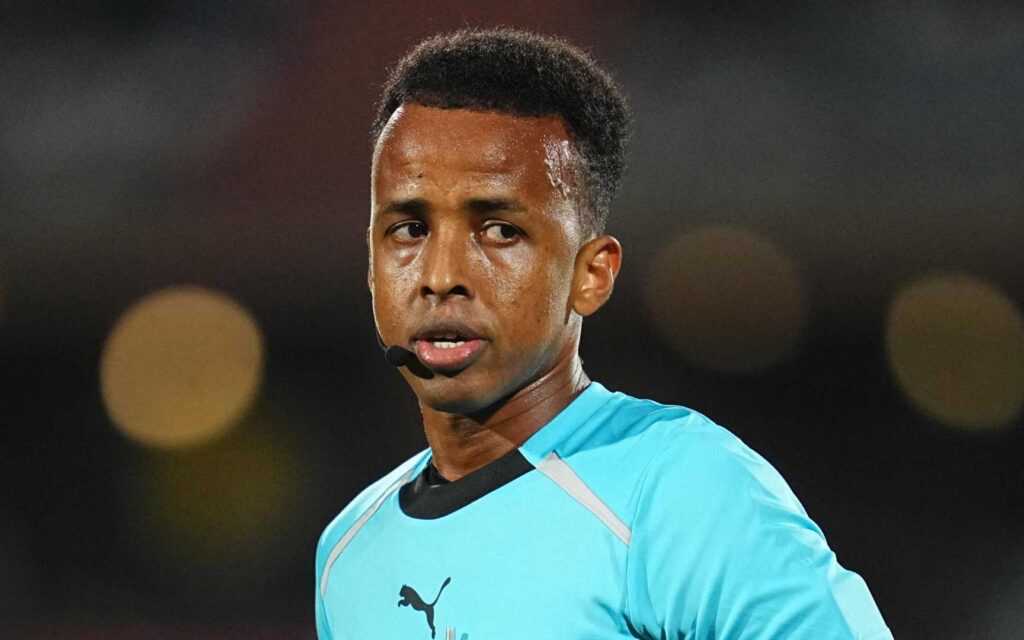
The most high-profile case involves Somali referee Omar Abdulkadir Artan, widely regarded as one of Africa’s leading match officials and the Confederation of African Football’s Referee of the Year for 2025.
Artan, who had been selected by FIFA to officiate at the World Cup, was denied entry into the United States after arriving at Miami International Airport despite reportedly holding a valid visa. U.S. authorities cited unspecified “vetting concerns,” and FIFA later confirmed that Artan would not be permitted to participate in the tournament.
The decision has sparked widespread criticism. Artan was set to become the first Somali referee in history to officiate at a FIFA World Cup, making his exclusion particularly significant. Somali sports officials described the situation as a setback not only for Artan personally but also for the principles of merit, inclusion and equal opportunity that FIFA seeks to promote.
Iraqi Delegation Encounters Difficulties
The Iraqi national team’s delegation also reportedly experienced complications upon arrival in the United States.
Star striker Aymen Hussein, whose goal secured Iraq’s first World Cup qualification in four decades, was detained and questioned for nearly seven hours at Chicago O’Hare International Airport before eventually being admitted into the country.
However, the team’s official photographer, Talal Salah, was denied entry after more than 10 hours of questioning. U.S. officials again cited unspecified “vetting concerns” as the reason for the decision.
Iran’s Preparations Disrupted
Iran’s preparations for the tournament have likewise been affected by visa-related issues.
Several members of the Iranian delegation reportedly experienced delays in obtaining travel documents, forcing the team to establish its base camp in Mexico and commute to matches hosted in the United States. While players and key coaching staff ultimately received clearance, some federation officials and support personnel were reportedly denied visas.
Reports also indicate that the visa application of Iranian Football Federation President Mehdi Taj was rejected ahead of activities connected to the World Cup. Meanwhile, national team head coach Amir Ghalenoei was reportedly still awaiting a final decision regarding his visa as the tournament opening rapidly approached.
The uncertainty has generated concern among Iranian supporters, many of whom fear difficulties securing travel authorization to attend matches and support their team.
FIFA Caught in the Middle
FIFA has repeatedly stressed that immigration and border-control decisions remain the responsibility of sovereign governments. While the governing body works closely with host nations to facilitate tournament operations, it does not possess the authority to overturn visa decisions or admissibility rulings.
In Artan’s case, FIFA stated that it had been informed by authorities that the referee’s status would not be altered and reiterated that it plays no role in national immigration processes.
For FIFA, the situation presents an uncomfortable challenge. The organisation has spent years promoting the 2026 tournament as the most inclusive and globally representative World Cup ever staged. With 48 teams participating for the first time, the expanded format was designed to broaden opportunities for nations across every confederation.
However, when accredited officials and participants encounter obstacles reaching the event, questions inevitably arise about whether the tournament can fully embody that vision.
Growing Concerns Ahead of Kick-Off
The United States will host 78 of the tournament’s 104 matches, including the final, making it the primary host nation. Canada and Mexico will each host 13 matches.
Reports suggest that a number of journalists, team officials and support staff from participating countries continue to face visa delays and administrative challenges as the competition draws closer. Concerns are growing that some accredited individuals may struggle to reach tournament venues and events in time.
American authorities maintain that all travellers, regardless of status or purpose of travel, are subject to immigration inspection and security screening. U.S. Customs and Border Protection has stated that admissibility decisions are made on a case-by-case basis using available immigration, law-enforcement and national-security information.
As the countdown to the opening match continues, FIFA and participating nations will hope that the focus soon returns to football. Yet the growing controversy surrounding immigration procedures serves as a reminder that even the world’s biggest sporting event cannot entirely escape the influence of global politics, security concerns and international relations.
Share this content: