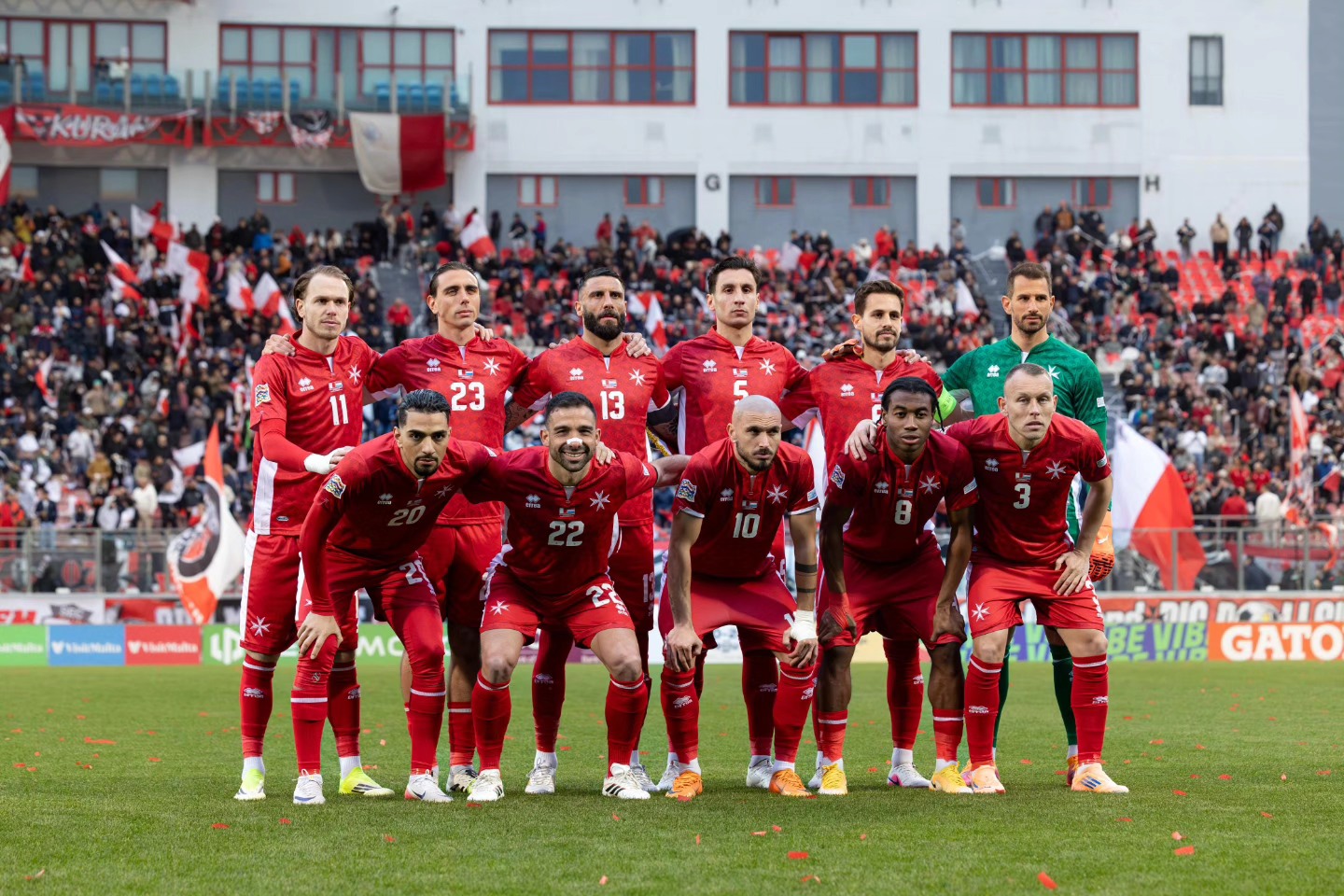
The Taeguk Warriors in FIFA World Cup 2026
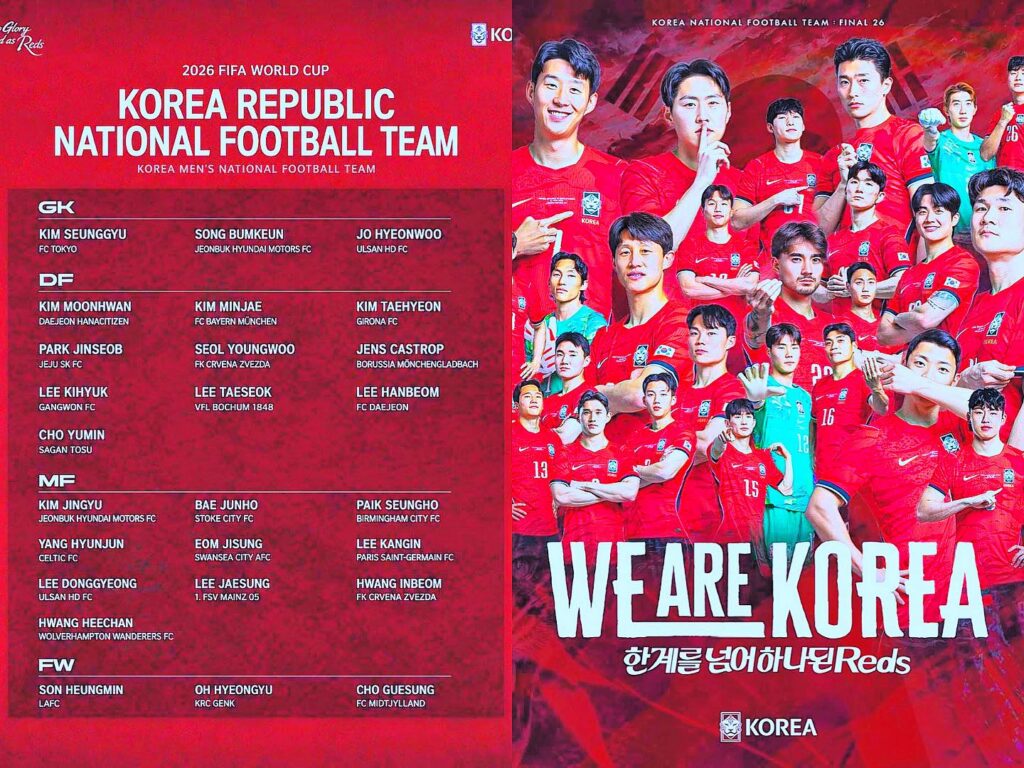

South Korea will once again represent Asia on football’s biggest stage after securing qualification for the 2026 FIFA World Cup in the United States, Canada and Mexico. The Taeguk Warriors have become one of the most consistent nations in international football, extending their remarkable run of consecutive World Cup appearances while continuing to produce elite-level players competing across Europe’s top leagues.
How South Korea Qualified for the 2026 FIFA World Cup
South Korea qualified for the 2026 FIFA World Cup by finishing in the automatic qualification places during the AFC qualifying campaign. Under manager Hong Myung-bo, the Koreans produced an unbeaten run and sealed qualification with a crucial 2-0 away victory against Iraq in Basra. The result guaranteed a top-two finish in their qualifying group and secured the nation’s 11th consecutive World Cup appearance.
The qualification campaign demonstrated South Korea’s consistency and experience. The side combined disciplined defending with quick attacking football, while senior players such as Son Heung-min and Kim Min-jae provided leadership throughout the campaign. Hong Myung-bo, himself a legendary former captain of the national team, has built a balanced squad capable of competing with stronger nations at the tournament.
South Korea’s qualification also continued one of the longest active streaks in world football. The nation has now appeared at every FIFA World Cup since Mexico 1986, placing them among the most reliable international sides outside Europe and South America.
South Korea’s History in the FIFA World Cup
South Korea first appeared at the FIFA World Cup in 1954, but their modern rise truly began in 1986 when they qualified for the tournament in Mexico. Since then, they have become Asia’s most recognisable World Cup nation alongside Japan.
Their greatest achievement came at the 2002 FIFA World Cup, which South Korea co-hosted with Japan. Under Dutch manager Guus Hiddink, the Koreans stunned the football world by reaching the semi-finals, still the best performance ever by an Asian nation in the men’s World Cup. During that unforgettable run, South Korea defeated Portugal, Italy and Spain before eventually losing to Germany in the semi-finals.
South Korea have also enjoyed several memorable moments in more recent tournaments. At the 2018 World Cup in Russia, they famously defeated defending champions Germany 2-0, eliminating the Germans in the group stage. Four years later in Qatar, the Koreans reached the Round of 16 after a dramatic victory over Portugal, once again proving their ability to compete against elite opposition.
The nation has built a reputation for energy, organisation and determination. Even against stronger opponents, South Korea are often difficult to break down and dangerous on the counter-attack. Many football supporters around the world now see the Taeguk Warriors as one of the dark horses capable of causing surprises at major tournaments.
South Korea’s Greatest World Cup and National Team Players
Cha Bum-kun
Cha Bum-kun is widely regarded as one of the greatest Asian footballers of all time. The legendary forward starred in the Bundesliga during the 1980s and became a pioneer for Korean players in Europe. His pace, power and finishing ability made him a national icon long before the current generation emerged.
Park Ji-sung
Park Ji-sung remains one of South Korea’s most celebrated players. Known for his incredible stamina and tactical intelligence, Park enjoyed enormous success with Manchester United under Sir Alex Ferguson. He played a key role during South Korea’s 2002 World Cup run and became the first Asian footballer to win the UEFA Champions League.
Hong Myung-bo
Current national team manager Hong Myung-bo was one of Asia’s finest defenders during his playing career. Calm on the ball and an excellent organiser, he captained South Korea during the 2002 World Cup and became a symbol of leadership and discipline.
Ahn Jung-hwan
Ahn Jung-hwan became a national hero after scoring the golden goal against Italy in the Round of 16 at the 2002 World Cup. His technical ability and knack for important goals made him one of the standout figures of South Korea’s greatest footballing era.
Son Heung-min
Son Heung-min has arguably become the most globally recognised South Korean footballer in history. The Tottenham Hotspur forward has established himself as one of the Premier League’s elite attacking players, combining explosive speed with clinical finishing. As captain of the national team, Son carries the hopes of millions heading into the 2026 World Cup.
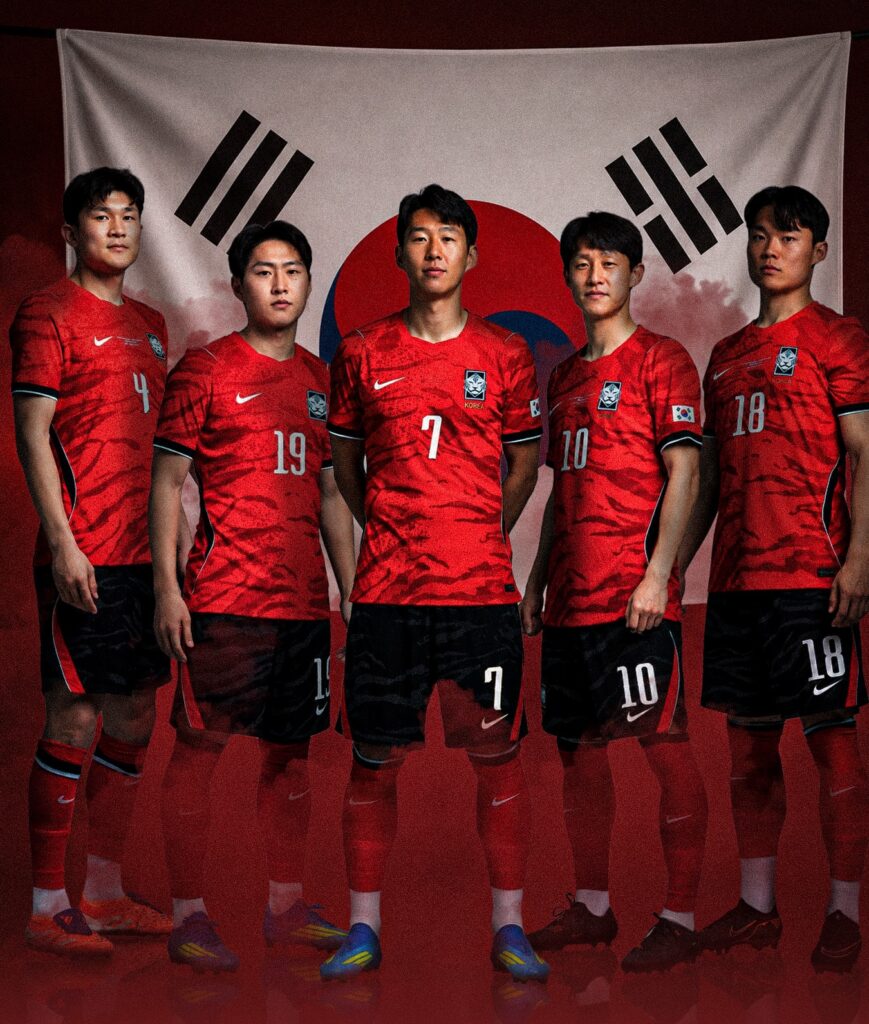
South Korea’s Current Best Players
Son Heung-min
Despite entering the later stages of his career, Son remains South Korea’s most important player. His experience, leadership and ability to score in crucial moments make him the heartbeat of the national side.
Kim Min-jae
The Bayern Munich defender has developed into one of the best centre-backs in world football. Strong, composed and dominant in the air, Kim Min-jae provides defensive stability and leadership at the back. His performances in Europe have elevated the reputation of Korean defenders internationally.
Lee Kang-in
Paris Saint-Germain midfielder Lee Kang-in represents the future of Korean football. Creative, technically gifted and intelligent in possession, he has become one of the most exciting young Asian players in Europe.
Hwang Hee-chan
The Wolverhampton Wanderers forward offers pace, direct running and relentless pressing. Hwang’s energy and attacking movement provide South Korea with an additional threat alongside Son Heung-min.
Lee Jae-sung
A highly experienced midfielder, Lee Jae-sung brings composure and work rate to the side. His understanding of the game and ability to link midfield with attack make him one of the team’s most dependable performers.
Expectations for the 2026 Tournament
South Korea enter the 2026 FIFA World Cup with realistic hopes of progressing beyond the group stage once again. While they may not be considered among the favourites to win the tournament, they possess a blend of experienced leaders and emerging talent capable of troubling stronger nations.
The expanded 48-team tournament could also create new opportunities for ambitious sides such as South Korea to make another memorable run. With Hong Myung-bo guiding a talented generation and Son Heung-min leading from the front, the Taeguk Warriors will believe they can once again capture the imagination of football supporters around the world.
Share this content: